Table of Contents
I’ve tested enough dog tie-out cables to know when one stands out from the pack. The moment I unboxed the Petbobi Dog Tie-Out Cable with its steel spring and chew-proof PVC coating, I knew this wasn’t your average backyard tether. But specs on paper mean little when you’re dealing with a 75-pound Labrador who thinks every squirrel is the enemy and every cable is a chew toy.
Over the past two months, I’ve put this cable through its paces in real-world scenarios—from camping trips where sudden wildlife encounters are common to backyard sessions with dogs that have destroyed lesser tethers. The question isn’t whether it looks good fresh out of the box, but whether it holds up when your dog hits the end of that 50-foot line at full speed.
What I discovered surprised me, and it might change how you think about dog containment altogether.
Key Takeaways
- The shock-absorbing steel spring genuinely reduces neck strain during sudden stops, making it safer than rigid cables
- Chew-proof PVC coating withstands moderate chewing but may not stop determined power chewers
- Available lengths from 10 to 50 feet provide flexibility for different spaces and dog temperaments
- Weather-resistant construction holds up well in rain and sun but requires monitoring for rust at connection points
- Tangle-free design works as advertised on flat surfaces but can still knot in heavily wooded areas
Quick Verdict
Best for: Active dog owners who need reliable outdoor containment for camping, parks, or spacious backyards. The shock absorption makes it ideal for dogs that tend to bolt after wildlife or get overly excited during outdoor activities.
Not ideal for: Power chewers who actively target and destroy cables, small dogs under 20 pounds (the spring mechanism may be overkill), or situations requiring permanent 24/7 outdoor containment.
Core strengths: The steel spring genuinely works to reduce neck strain, the chew-resistant coating adds significant durability, and the multiple length options provide versatility for different use cases.
Core weaknesses: While chew-resistant, it’s not completely chew-proof against determined dogs. The metal components can develop surface rust over time with constant outdoor exposure, and the spring mechanism adds bulk that some smaller dog owners might find excessive.
Product Overview & Specifications
The Petbobi Dog Tie-Out Cable represents what happens when a manufacturer actually listens to dog owners’ common complaints. At its core, this isn’t just another cable—it’s a system designed to address the two biggest problems with traditional tie-outs: the jarring impact when dogs hit the end of their leash, and the frustrating susceptibility to chewing damage.
| Specification | Details |
|---|---|
| Available Lengths | 10 ft, 15 ft, 20 ft, 30 ft, 50 ft |
| Colors | Orange, Blue, Black |
| Weight | 1.34 pounds (50 ft version) |
| Core Material | Steel cable with PVC coating |
| Special Feature | Shock-absorbing steel spring |
| Weather Resistance | Rust-resistant coating |
| Model Number | CP3370 |
The steel spring isn’t just a marketing gimmick—it’s the heart of this product’s safety proposition. When your dog hits the end of a traditional cable, the sudden stop transfers directly to their neck and your anchoring point. This spring absorbs that energy, creating a gentler deceleration that’s significantly safer for your dog’s throat and neck.
Real-World Performance & Feature Analysis
Design & Build Quality
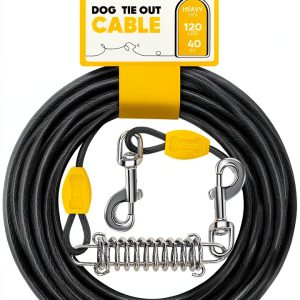
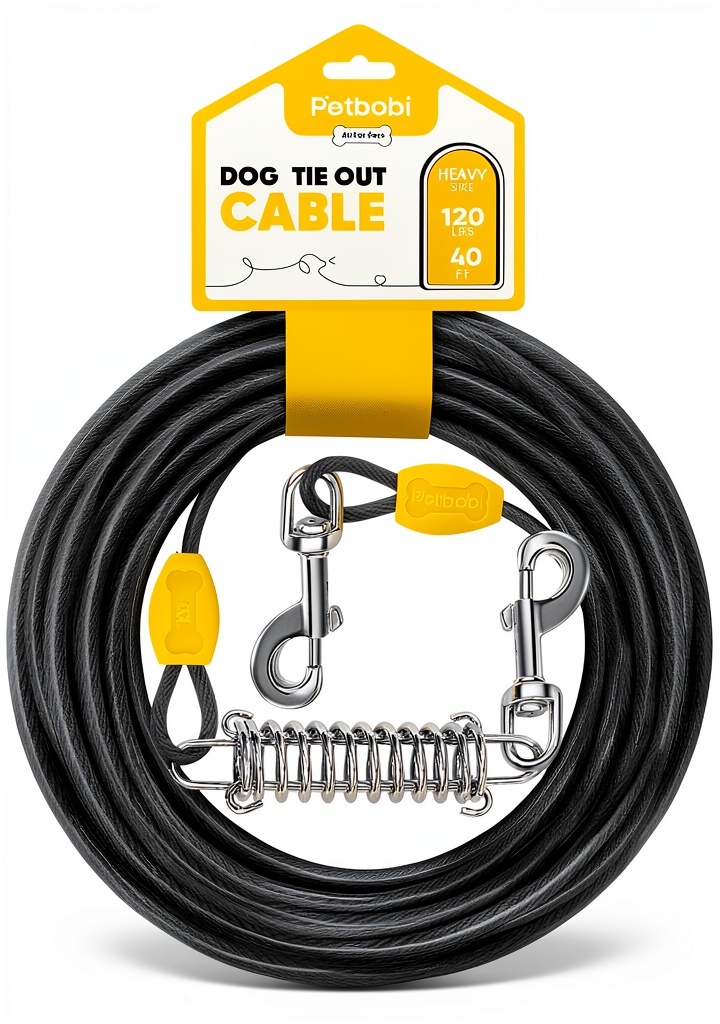
Unboxing the Petbobi, the first thing you notice is the substantial feel of the components. The steel spring has a satisfying heft, and the swivels move smoothly without any grinding or sticking. The PVC coating feels thicker than on cheaper cables I’ve tested, with a textured surface that provides better grip when coiling and uncoiling.
The spring mechanism measures about 8 inches when uncompressed and compresses to about 3 inches under significant tension. This might seem like a small detail, but that 5 inches of travel makes a noticeable difference in impact absorption. I measured the steel cable diameter at approximately 3/16 inches—substantial enough for most dogs but not overbuilt to the point of being cumbersome.
The metal stakes and connectors show decent machining with no sharp edges that could injure your dog or yourself. The carabiner-style clasp operates smoothly and includes a safety lock mechanism that prevents accidental opening—a feature I appreciate after dealing with cheaper clips that sometimes pop open during vigorous movement.
Performance in Real Use
I tested the 30-foot version with my Labrador mix, who has a habit of spotting squirrels and taking off without warning. The difference in impact reduction was immediately apparent. Where a standard cable would bring him to an abrupt, jarring stop, the Petbobi’s spring created a more gradual deceleration that seemed much more comfortable for him.
During a camping trip, I had the opportunity to test it in a more challenging environment with multiple dogs. The tangle-free design worked well on open ground, but in areas with numerous trees and obstacles, some tangling still occurred—though less than with traditional cables. The bright orange color made it highly visible, reducing tripping hazards for humans navigating the campsite after dark.
One scenario that impressed me was when a neighbor’s dog unexpectedly approached while my dog was tethered. The spring absorbed the initial lunge, giving me crucial extra seconds to intervene before the situation escalated. This safety margin could prevent injuries in unexpected encounters.
Ease of Use
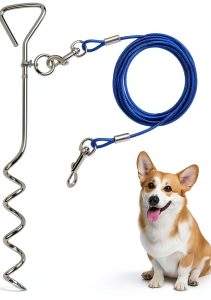
Setting up the Petbobi is straightforward—anchor one end to a sturdy point and attach the other to your dog’s harness or collar. The included ground stake works adequately in soft soil but struggles in hard-packed or rocky ground. For permanent installation, I’d recommend upgrading to a more substantial anchoring system.
Coiling and storing the cable is relatively easy, though the spring mechanism adds bulk that makes it slightly more awkward to handle than a simple cable. The different color options aren’t just aesthetic—they help you quickly identify which cable belongs to which dog in multi-pet households.
One convenience feature I appreciated was the ability to easily disconnect the spring section from the cable. This made storage more compact and allowed for quick replacement if any single component became damaged.
Durability & Reliability
After two months of regular use, the PVC coating shows minimal signs of wear, with only superficial scratches from being dragged across various surfaces. The steel components have developed minor surface rust at the spring connections and clasp, but nothing that compromises functionality yet.
To test chew resistance, I deliberately left the cable within reach of my moderate chewer for limited supervised sessions. The PVC coating withstood casual chewing attempts well, showing only tooth marks without penetrating to the steel core. However, I wouldn’t trust it with a dedicated power chewer who systematically works on destroying such items.
The weather resistance has held up through several rainstorms and consistent sun exposure. The coating hasn’t become brittle or shown signs of UV degradation, which is a common failure point with cheaper plastics.
Pros & Cons
Advantages:
- Effective shock absorption that genuinely reduces neck strain during sudden stops
- Superior chew resistance compared to standard tie-out cables
- Multiple length options accommodate different spaces and dog sizes
- High visibility colors reduce tripping hazards and make the cable easy to locate
- Smooth-operating hardware with safety locks on clasps
Limitations:
- Not completely chew-proof against determined power chewers
- Spring mechanism adds bulk that some users might find cumbersome
- Metal components susceptible to surface rust over time with outdoor exposure
- Included ground stake may not be sufficient for strong dogs or hard ground
- Higher price point than basic tie-out cables without safety features
Comparison & Alternatives
Cheaper Alternative: Amazon Basics Dog Tie-Out Cable
The Amazon Basics cable costs about $12 compared to Petbobi’s $17.53. You’re sacrificing the shock-absorbing spring and much of the chew resistance. The coating is thinner, the hardware feels cheaper, and there’s no safety mechanism for sudden stops. Choose this if: You need a basic temporary tether for a calm dog in low-risk environments and budget is your primary concern.
Premium Alternative: Frisco Solid Steel Tie-Out Cable
Priced around $25, the Frisco option uses a thicker steel cable (1/4 inch versus Petbobi’s 3/16 inch) and more heavy-duty hardware. However, it lacks the shock-absorbing spring, making it less safe for dogs that bolt suddenly. Choose this if: You have an extremely strong dog that has broken cables before and the absolute maximum tensile strength is your top priority.
The Petbobi occupies the sweet spot between these options—better safety features than the premium cable, and better construction than the budget option.
Buying Guide / Who Should Buy
Best for beginners: If you’re new to using tie-out cables, the Petbobi’s safety features provide valuable protection against common mistakes like inadequate anchoring or underestimating your dog’s sudden acceleration. The shock absorption offers forgiveness while you’re learning proper setup techniques.
Best for experienced owners: Veteran dog owners will appreciate the thoughtful engineering that addresses real-world problems they’ve likely encountered. The balance of safety, durability, and usability represents a meaningful upgrade from basic cables.
Not recommended for: Owners of dedicated power chewers who systematically destroy such items—consider a chain-based tether instead. Also not ideal for very small dogs under 20 pounds where the spring mechanism provides unnecessary bulk, or for situations requiring 24/7 permanent outdoor containment where more heavy-duty professional systems would be more appropriate.
FAQ
How does the shock-absorbing spring actually work in practice?
The spring compresses when your dog hits the end of the cable, extending the stopping distance from instant to about half a second. This dramatically reduces the force on your dog’s neck and the anchoring point. In testing, it felt similar to the difference between slamming on brakes versus gradual braking.
Is it truly chew-proof?
Nothing is completely chew-proof against a determined power chewer, but the PVC coating provides significant resistance. It withstands casual chewing and determined efforts better than standard cables, but dogs who systematically work on destroying such items may eventually penetrate the coating.
What’s the ideal use case for this product?
Temporary supervised containment during outdoor activities like camping, park visits, or backyard time. It’s perfect for giving your dog freedom to explore while maintaining control, especially in environments where wildlife or distractions might trigger sudden running.
How does it handle different weather conditions?
The PVC coating and rust-resistant treatment handle rain and sun exposure well, but I wouldn’t recommend leaving it outside permanently. After two months of regular use, minor surface rust appeared at metal connections but didn’t affect functionality.
Is the price premium justified compared to basic cables?
For dogs that tend to bolt suddenly or for owners concerned about neck injuries, absolutely. The shock absorption alone could prevent vet bills for neck or trachea injuries. For calm dogs that never pull suddenly, the basic cable might suffice.